Author Archive
Tip #2: Step awaaaaay from the Sudocrem!

Bepanthen Saved our Girls' Butts!
If you have Sudocrem in your baby’s bag of tricks and your baby is still getting (even slight) nappy rash put it back in the cupboard or in the recycling bin. I used Sudocrem at every nappy change for the first 12 months (we also tried Paw Paw ointment and 100% pure Emu Oil) with our twins and they were still getting nappy rash. Mum used Sudocrem for my little brother and sister so I suppose it was a familiarity thing. Like reaching for the same brand of peanut butter purely because you recognise the colours on the pack! It didn’t seem to be working for my girls though so I was pedantically changing them almost every hour or two but it just wasn’t helping. The final straw was when Kaia developed a really severe bout of nappy rash and it actually blistered all over her bottom and spots of skin brushed off leaving a raw exposed layer of dermis. I went to the chemist and bought Bepanthen and NEVER LOOKED BACK! 7 months on and with only one application a day (at night after baths) neither of the girls have had a nappy rash since. Bepanthen has a gentle antiseptic in it to avoid infection so it also helps with skin irritations and apparently cracked nipples while breastfeeding. Not sure how great it is to be in baby’s mouth though really. I only switched to it after I finished breastfeeding. Lansinoh was wonderful for my cracked nipples. Oh, there’s yummy mummy tip #3!
Pre-Loved Clothing – Avoiding PBDE’s
I was told by friends how quickly babies grow out of their clothing and into the next size but I couldn’t have fully appreciated it until now. Our girls are 1 1/2 years old and all of their beautiful clothes bought and gifted to us are in a storage box nearly brand new. As children grow so quickly from birth to age 2 don’t be squeamish to buy or accept pre-loved baby clothes. (Especially from 0-6 months the only thing to touch them is breast milk or formula!) And from starting solids at 6 months onward babies grow so rapidly the outfits are probably worn less than 50 times each. They really are practically brand new with the added benefit of being pre-washed! Parents are becoming more aware of PBDE’s (fire retardants) in clothing and looking for ways to remove these very dangerous chemicals from their childrens’ lives. You can’t get much more intimate an issue than the clothing on your children’s bodies 24/7.
 Look out for tags saying “Low Fire Danger”. It means the garment has been treated with dangerous Polybrominated diphenyl ethers (PBDE).
If you can’t afford to buy organic material clothing, the benefit of Pre-Loved’s is they have been washed and rewashed so many chemicals in the materials (such as fire retardant PBDE’s) and dyes have been diminished. Clothing, especially from China have a slight acidic/toxic smell to them (some worse than others) so getting seconds rather than brand new is really an improvement for your little baby’s health. Their very delicate skin will absorb, and their little lungs will inhale, absolutely everything in those fibres and increase the chemical load on their organs and system. (The higher risk to children is a result of their higher metabolic rate, higher intake of airborne pollutants and lower resilience, resulting in a two to four times higher absorption rate (Gilbert and Black 2000).
Keep this in mind when you’re eyeing off a lovely new ‘inexpensive’ outfit from China in the shops. If you must buy brand new look for organic cotton or bamboo for all of baby’s clothes in the first 6 months. You really don’t need too many outfits while they’re this young so make any new purchase a good one and go organic.

Babies love Pre-Loved!
So back to the wonderful alternative of Pre-Loved Clothing. If you’re lucky enough to have friends with children slightly older than yours they may have clothing they want to gift to you. They certainly won’t hand you down tatty clothing so what you do receive will most likely still look brand new (and be gratefully accepted, thank you to our wonderful friends Marianne & Michael and Dean & Amanda!). Alternatively, visiting your local ‘thrift’ shop to buy inexpensive second hand clothing is a great idea. They won’t put anything tatty on the shelves either so you can be sure to find some great items at a fraction of the cost brand new (and more importantly with a fraction of the chemicals!). A good trick to finding lovely 2nds clothing is visiting thrift stores in or near ritzy, more affluent suburbs where the standard of clothing donated by the locals is higher.
For those mums whose children have already outgrown a couple of sizes I stumbled across a great concept called Kids Clothes Swap. If you Google it or ask around your mothers’ groups you may find one in your local area. They usually ask an entry fee and have a maximum limit for clothing on a 1 for 1 swap basis. As an example there’s one on the Gold Coast, Australia for $10 for 30 items swapped and another $10 per additional 30 items of clothing. Of course only quality pre-loved clothes in good condition are accepted for trade (and are what you want to receive in return for yours so it’s only fair). So take along all your outgrown baby clothes and come home with a brand new wardrobe for just the entry fee. Hats off to the fantastic ladies who thought up this idea!
If you see the sense in this approach of Pre-Loved clothing let friends and family know so you don’t receive gifts you feel guilty or worried about using (or that simply end up in the bin). Set your friends and family on the healthy path of finding great Pre-Loved’s from thrift shops. It’s actually quite exciting finding a beautiful item for a great price. It’s like SALE TIME in the retail shops!
More info on the health impacts of PBDE/Fire Retardants in my article Organic Baby Sleepwear – Avoiding PBDE’s
I may actually write a specific article explaining PBDE Fire Retardants and their health impacts based on findings from the Australian Government 2006 study. I’ll highlight excerpts of importance and break down the findings into key points so it’s easy to reach the important information. For those who are concerned about PBDE’s but are time poor, wading through all of these documents just isn’t possible. So stay tuned. More to come.
It’s that wonderful…
 “It’s that wonderful old-fashioned idea that others come first and you come second. This was the whole ethic by which I was brought up. Others matter more than you do, so ‘don’t fuss, dear; get on with it’.”
— Audrey Hepburn

When I start to feel tired, as all mums do, I look to the Hepburns both Audrey and Katharine to lighten my spirits. They have a way with words both headstrong, one feminine, one masculine, straight to the point and both beautiful women. I feel like I’m listening to a wonderful Aunty who just tells it like it is! JK
Your House is a Toxic Soup
 Unless you live out in the wilderness with not a scrap of production line man-made furniture, carpet, paint, curtains/blinds, soft furnishings or you live in an eco-designed and diligently sourced organically furnished and finished house, you’re living in a silent toxic soup. Even the clothes on your back and the food on your plate are impacting your health.
The community at large scratch their heads and wonder but more hopefully, suspiciously question, why the cancer (and to a lesser extent, asthma) rates are so high in this day and age. Some say that incidences of cancer have always been like this, it’s just that we have better testing for it now. Open your eyes! The Australian Government website has an extensive “State of Knowledge Report” on Air Toxics and Indoor Quality in Australia which is extensive in it’s information. I have gleaned some areas that I think should be highlighted, especially for indoor air quality with regard to infant and children’s health and safety. Not to mention your own.
There are 28 priority air toxic pollutants in our homes today. Not out in the atmosphere over industrial plants or in the ‘big cities’. IN OUR HOMES. 28 acknowledged air toxic pollutants listed by the Government as priority safety concerns. (Definition: “The NHMRC defines indoor air as any non-industrial indoor space where a person spends a period of an hour or more in any day. This can include the office, classroom, motor vehicle, shopping centre, hospital and home.“) Here is the “28 Most Un-Wanted” list at paragraph 5.3 Priority Air Toxic Pollutants – recommended list. Now, this roll call of slightly familiar sounding words is meaningless unless you know their health effects. Read their Factsheets outlining common uses, likely sources, and health & environmental effects. Also paragraph 1.1 Community concerns (excerpt “Exposure to air toxics can affect health, with effects ranging from none, through mild and immediate (eg watery eyes), to more extreme (eg lung damage, nervous system damage or even birth defects and cancer). The extent to which these adverse effects present themselves depends on a number of factors such as the type of air toxic to which a person is exposed and the length and severity of the exposure.“)
Formaldehyde was predominantly the reason for my research. I was already very aware of pressed wood products such as couches (framework, but also fabric), dining tables & chairs, bookshelves, kitchen cabinets and benchtops and a swathe of other household furniture containing glue with Formaldehyde, a known human carcinogen. Mainly because I hated the smells I experienced walking through ‘cheap’ furniture stores I sought to find out what it was. You need not Google too far to find that there are a lot of complaints out there regarding eye, nose, throat, chest and breathing difficulties after buying a new piece of ‘cheap’ furniture. Here’s one example of a man’s new purchase of a simple, unassuming bookshelf from a major retailer going horribly wrong. I’m guessing his story is similar to a lot of experiences in Australia and around the world but most don’t dedicate a website to finding out more and reaching out to others who have had similar experiences.
In his extensive correspondence with the ‘retailer’ he very correctly summarises the very real concerns for babies sleeping in a nursery filled with brand new furniture for their arrival. “Formaldehyde can cause serious health problems, particularly in those too young to complain, e.g. babies who might have such furniture in their bedrooms and yet sleep there night after night, being unable to communicate that they feel ill.”
Excerpt “We can better understand ageing if we realise that the formaldehyde emission is typically due to two processes, with both of those processes declining as the sample ages. Initially, much of the formaldehyde emission is due to the release of trapped formaldehyde – that emission falls as the trapped formaldehyde is used up. When the trapped formaldehyde has gone, emission of formaldehyde that is produced by chemical reactions continues – that process declines more slowly. The net effect is that as the product ages, the formaldehyde emission falls initially comparatively rapidly, then later more slowly, but never quite reaches zero. The timescale involved is typically a matter of months or years.” This is my primary reason for stating in article Hand me Downs “Old is Gold!” Buy second hand and the majority of outgassing will have already taken place.
Unfortunately formaldehyde is not just in our furniture, it’s used in darn near everything. We are exposed in nearly every facet of our daily lives from the treatment of seeds of the plants we eat, chicken and cattle for parasites to the glue in our furniture (particleboard in our couches, desks, tables, tv cabinets, bookshelves etc) and surface coatings, to the petrol in our cars, to the dyes in our clothes and permanent press items, skin disinfectants, mouth washes, spermicides…the list really goes ON and ON and ON. I have included it below for your ease of reference. I’m floored by the extensive areas Formaldehyde is utilised intentionally in our society. It’s absolute insanity.
The factsheet for Formaldehyde shows why it the most recognised of all human carcinogens littered throughout our everyday lives. It’s everywhere. It’s common uses, method of exposure, effects on our health, the environment and it’s animals is extracted below. I urge your to read it and view your world ‘wide-eyed’ when you next head out shopping for that new couch that’s soooo affordable you just HAVE to have it.
Or even more concerning, plan to paint your new baby’s nursery walls, buy a brand new cot, change table, chest of drawers, toy chest, put up new curtains, lay new carpet, buy a new rug and a swathe of ‘flame retardant/low fire danger’ PBDE doused clothing for the arrival of your precious baby. Think twice about everything you put in your baby’s room and on their bodies! Buy organic clothing for them the first 6 months of life. They aren’t even crawling till that age so fancy coloured clothing and shoes are really unnecessary till later on.
Clause 6.4 Sensitive Sections in the Community (excerpt “Significant proportions of the population have a greater sensitivity to pollutants. These commonly include newborns, young children, the elderly, heart patients, those with bronchitis, asthma, hayfever or emphysema, and smokers. These population sectors will be at greatest risk from pollutant exposures and, according to the Allergy, Sensitivity, Environmental Health Association (1998), deserve ‘special consideration’. The higher risk to children is a result of their higher metabolic rate, higher intake of airborne pollutants and lower resilience, resulting in a two to four times higher absorption rate (Gilbert and Black 2000)…. Exposure to environmental toxics (not necessarily airborne) has been suggested as one of a number of factors which may be associated with attention deficit hyperactivity disorder, attention deficit disorder and, to a lesser extent, chronic fatigue syndrome. However, the causes of these disorders are poorly understood, and it is not currently possible to make any definitive statements about their possible links to airborne pollutants.”
If you are unable to attain ‘source emission control’ (ie. avoiding cheap products such as pressed wood furniture; couches, tables, chairs, kitchen kits, carpets and rugs etc) thereby sourcing healthier materials/purchases for your household, then at the very, very least you can take steps to improve your indoor air quality.The simpliest thing you can do to ‘improve’ your indoor air quality is ensure your home is well ventilated every single day. If you have air conditioning and the weather is hot, it’s tempting not to. But even for an hour or two, open the doors and windows completely and let fresh air and in condensed old air out. Remember that while your house is shut up through the night you and your children are breathing these toxic air pollutants listed by the Australian Government. Minimise your purchase of new furniture by buying 2nd hand goods from Ebay and the like. Definitely avoid brand new purchases for your baby’s nursery and if you can’t afford organic or human & environmentally friendly purchases “Old is Gold“.
Introduction para 6.1 “Despite the long periods we spend indoors, relatively little research has been done on the quality of air in our homes, schools, recreational buildings, restaurants, public buildings and offices or inside cars. In recent years, comparative risk studies performed by the US EPA and its Science Advisory Board have consistently ranked indoor air pollution among the top five environmental risks to public health.”
At clause 6.2 Indoor Air Pollutants there is also the much bigger list capturing things like dust mites, tobacco smoke, acetone, ethyl acetate etc and clause 6.3 Health effects as a result of exposure to pollutants (Excerpt “The occupants of buildings with poor indoor air quality can suffer from severe effects (asthma, allergic response, cancer risk) to mild and generally non-specific symptoms. Some health effects may show up years after exposure has occurred or only after long or repeated periods of exposure, and thus can be characterised as long-term health effects. These effects, which include respiratory diseases and cancer, can be severely debilitating or fatal. Long-term health effects are associated with indoor air pollutants such as radon, asbestos, and environmental tobacco smoke.“.
In addition to the Priority Air Toxic Pollutants, Clause 7.1 Broad Categories and Sources for Indoor Air Pollutants. “Sources of indoor air pollutants include building operations and construction materials, household products, external factors and various human indoor activities.“
Broad Categories and Sources of Indoor Air Pollutants Clause 7.2 Criteria pollutants in the indoor environment (Excerpt “Table 7.2 summarises the main indoor air pollutants, their important sources and typical concentration ranges, as well as some possible responses.“) It then goes on at 7.2.1 to list all of the air pollutants such as Nitrogen Dioxide, Lead, Radon, VOC’s and Formaldehyde.
I’m no expert. I’m still learning every day about pollutants in the furniture we buy, the consumer products we use and the food we eat. But I’m searching for knowledge. For the sake of you and your family, I hope you do too.
In my research travels I’ve come across some interesting articles on this topic of toxic exposure in our homes, food, environment, our bodies and ultimately what should be most sacred and protected of all…our breastmilk. I’ll comment on these as I find the time. I’m currently enjoying the challenge of raising two very beautiful, very active (and slightly whingey!) 19 month old girls. Please join my site to join in the conversation and share your own experiences!
The Age: Furnishings Key to Infertility?
7:30 Report: Tests Confirm Alarming Contaminant Levels in Food
Fresh Berries ROCK!

A great Vitamin C Boost for kids!
Frozen berries are just as good if not better. Snap frozen fresh from the farm they pack a great punch for Vitamin C along with other minerals and phytochemicals and flavonoids.
Find out about the great health benefits of Berries and a few tantalising recipes.
Tasty (& healthy!) morning treat….
BERRY BLITZ
- Handful of Frozen berries (The 4 mix from McCain is my fave – blueberries, redcurrants, mulberries & raspberries)
- Fresh orange juice (not reconstituted)
- Mango Juice/Syrup
- Ice
- A dash of love
Sing while blending and serve while icey! If you like a tangy edge, dollop in a spoon of plain yoghurt to the recipe. Serve to your loved ones with a smile.
3 Plastics to Avoid: #3, #6, #7, and Why…
Article from Suite 101.com

How to Avoid Unsafe Plastics
All plastics are rated using a number system. Understanding what those numbers mean can help people do more than recycle, it can help them avoid dangerous chemicals.
More than ever people are concerned about the products in their lives, especially when it comes to plastic. There are concerns over the safety of some of the ingredients used in plastics, particularly bisphenol A. Fortunately there are codes on the bottom of all plastics which can help the health conscientious consumer stay informed. Here is what the codes mean and a guide to which plastics should be avoided due to potential toxicity.
Number 1- Polyethylene Terephthalate (PET or PETE)
This is found in many single-use products such as soft drinks, mouthwashes, salad dressing and other similar items. It is lightweight, inexpensive and fairly easy to recycle. Number one plastics are considered safe and are not known to leach chemicals, but they are not safe for reuse so never refill any container made from this plastic. Also, never heat foods in number one plastic containers either.
Number 2 – High density polyethylene (HDPE)
This plastic is used for items like milk jugs, trash bags, margarine tubs and packaging products. It is inexpensive, versatile and quite durable. It is also easily recyclable, with recycling programs available in most communities. Number two plastic is considered safe and isn’t known to leach chemicals. But, like most plastics, it’s wise to never heat food or liquid products in them.
Number 3 – Polyvinyl chloride (V or PVC)
This plastic is used to make bottles for cleaning agents, shower curtains, industry plastics and the cling wraps used to wrap deli meat and cheeses. It isn’t generally recycled but some programs will accept it. Number three plastic is not safe due to a chemical used to keep it so flexible which can leach out into food products. This plastic has di-2-ethylhexyl phthalate in it, which is a carcinogen. It also contains chlorine and will release dangerous toxins if burned.
Number 4 – Low-density polyethylene (LDPE)
This plastic can be found in things like frozen food bags, squeezable bottles, grocery bags and some clothing, carpeting and furniture upholstery. It is flexible, durable and has many applications in industry. Number four plastic isn’t known to be dangerous or leach any chemicals into consumer products. It is not widely recycled but a handful of community programs will accept it.
Number 5 – Polypropylene (PP)
This plastic can be found in items like ketchup bottles, straws, medication bottles, some carpet and most bottle caps. It has a high melting point so it is also used for containers that will hold hot liquid. Number five plastic is hazardous during production but once made, it isn’t known to leach chemicals. It is typically used in items that aren’t reused and has a high melting point, which might contribute to it’s sturdiness and reduced risk of leaching. Not every community can recycle number five plastic.
Number 6 – Polystyrene (PS)
This plastic is used for items that must be hard and retain their shape, like cups, opaque plastic utensils, some toys, carry-out containers and compact disc cases. It is also used for foam insulation. Number six plastic isn’t generally recycled and is not considered safe by most experts. Benzene, a known carcinogen, is used during its production and the final product contains butadiene and styrene, both suspected carcinogens. It takes a lot of energy to produce and should be avoided, so watch out for take out food containers made from it.
Number 7 – Other
Number seven is a catch-all category for any number of plastics but often contains polycarbonate. It is often found in baby bottles, five-gallon water jugs, microwave containers, liners for metal cans, and plastic eating utensils. Very few recycling programs exist for this type of plastic. Number seven plastic is widely regarded as unsafe since it has bisphenol A, a hormone disruptor which mimics estrogen and is linked to breast cancer. This plastic is known to readily leach this chemical out into food. Infant formula and canned food has tested positive for biphenyl-A after being placed in metal cans lined with number seven plastic. It’s a good idea try to always avoid number seven plastic.
Read more at Suite101: How to Avoid Unsafe Plastics: An Easy to Use Consumer Guide to Plastic Codes
Plastic NOT Fantastic: BPA – The silent poison. Hormone Disrupter.


In this modern world of ours the convenience of plastic and the silent price we pay is really something that goes unthought of. Plastics are practically unavoidable in our everyday lives but when it comes to what we choose to allow into our newborn baby’s mouth and stomach (and yours while you’re pregnant), we should pause and consider what some plastics actually contain. When you consider the amount of contact our babies have with plastic on a daily basis (bottles, teethers, sippy cups, feeding bowls, storage containers for food purees, etc) this is a serious issue that every mum & dad should be well informed on. There is a plethora of discussions about BPA and if you Google it you’re sure to find conflicting information on whether or not there is any danger. The fact that some major companies are removing BPA from all their baby products suggests that there is some merit in the health concerns and moving away from it is just the smart, socially and ethically responsible thing to do. Here is one article from Medical News Today, NY Times.
“The substance of concern is bisphenol-a, or BPA, an industrial chemical widely used as the starting material in the making of the hard, clear and nearly unbreakable plastic called polycarbonate. Studies and tests show that trace amounts of BPA are leaching from polycarbonate containers into foods and liquids.
While most of the focus is on products for children, including clear plastic bottles and canned infant formula, the chemical is also used in food-storage containers, some clear plastic pitchers used for filtered water, refillable water bottles and the lining of soft-drink and food cans.
While there is debate about how much of a health worry BPA really is, retailers in the US including Wal-Mart have said they are withdrawing baby products made with it. Nalgene, the maker of a popular sports bottle, and the baby-products maker Playtex have announced they will stop using it.
Several studies have shown that BPA disrupts hormones in animals, leading to early sexual maturity, changes in development and organization of tissue in mammary glands and reduction in sperm in the affected organism’s offspring. The early stages of fetal development are thought to be the most vulnerable to harm from BPA, said the authors in a prepared statement.
Michels said that:
“We found that drinking cold liquids from polycarbonate bottles for just one week increased urinary BPA levels by more than two-thirds.”
“If you heat those bottles, as is the case with baby bottles, we would expect the levels to be considerably higher,” she added, explaining that is worrying because “infants may be particularly susceptible to BPA’s endocrine-disrupting potential”
How do I know if the plastic containers in my home contain BPA?
Any product made of hard, plastic is probably made from polycarbonate unless the manufacturer specifically states that it’s BPA-free. One way to check is to look for the triangle stamp on or near the bottom: polycarbonate plastics should have the numeral 7 in the triangle, sometimes with the letters PC..
(Unfortunately, 7 is a catchall “other” category for a variety of plastics. In my own kitchen, I found our Happy Baby food bowls’ lids were #7 while the bowl component was a #5 (#5 is a plastic that is considered ‘should’ be safe). I would never, ever, heat or reheat food in the microwave for baby in a plastic container WHATEVER the number. Toddle off to KMart and buy yourself a couple of Pyrex containers. They have plastic lids but you won’t be putting those into the microwave. We found these really useful for taking out on shopping trips and heating the twins’ meals….lids off. JK)
How do I lower my exposure?
Switch to frozen or fresh vegetables. Use glass, porcelain and stainless-steel containers, particularly for hot foods and liquids. If you don’t want to use a glass baby bottle, several companies, including the popular brand Born Free (in the US, sold online or through Target), now sell BPA-free baby bottles and sippy cups. For formula-fed babies, you can switch to powdered formula rather than liquid.
Although many plastic products claim to be microwave safe, some scientists warn against putting any plastic in the microwave. “There is such a wide variety now, from disposable containers to actual Tupperware,” says Dr. Anila Jacob, a senior scientist for the Environmental Working Group, a Washington-based advocacy group. “I don’t know of anyone who has done definitive testing of all these different types of plastic containers to see what is leaching into food.”
Ref: Medical News Today
NY Times
Here’s what the Australian Food Standards have to say (19 January 2010):
What is BPA?
BPA is an industrial chemical used as the starting material for the production of polycarbonate plastics and synthetic resins. BPA is found in items or containers that come into contact with foodstuffs such as drinking vessels, baby bottles, plastic tableware and the internal coating on tins for tinned-food. In some circumstances, chemicals in food packaging can migrate into the food product, and vice versa, depending on the nature of the packaging and the food contained within.
What are the health effects of BPA?
Bisphenol A does not cause cancer. BPA belongs to a group of substances which can act in a similar way to some hormones and, as such, are sometimes called ‘endocrine disruptors’. Some studies in laboratory animals suggest that low levels of (consumed) BPA may have an effect on the reproductive system. Similar consequences in consumers at these low concentrations are considered unlikely because BPA is rapidly inactivated and then excreted in the urine.
Are very low levels of BPA in food of a concern?
FSANZ has evaluated the safety of BPA and plasticisers in food, including that consumed by infants from baby bottles and concluded that levels of intake of BPA or plasticisers are very low and do not pose a risk to public health for any age group. For example, a 5kg baby would need to consume around 80 large (240 mL) baby bottles full of infant formula a day, every day over a lifetime, before reaching the daily safety limit for Bisphenol A of 50 micrograms/kilogram body weight per day. This would be around fifteen to twenty times more than a baby would eat. (NOTE: This comment refers to prepackaged ‘liquid’ baby formula not powdered OR the risk of heating powdered milk formula in plastic bottles. JK)
However, FSANZ is liaising closely with national and international regulators and Australian industry on this issue in order to assess the new evidence and exposure levels in Australia.
Is there anything I can do as a consumer?
Regulators around the world have concluded that exposure to low levels of BPA is safe.
However, when using baby bottles, always follow the instructions on the infant formula for preparation and use. The following advice applies to all baby bottles or cups, whatever type of plastic they are made from:
- Discard any scratched bottles or feeding cups as they may harbour germs
- Do not put boiling or very hot water, infant formula, or other liquids into bottles while preparing them for your child
- Before mixing water with powdered infant formula, boil the water and cool it to lukewarm
- Always remember: do not heat baby bottles of any kind in the microwave – the liquid may heat unevenly and burn your baby
- Sterilize and clean bottles according to instructions on infant formula labels and they should be left to cool to room temperature before adding infant formula.
While agreeing with their recommendations for reducing the safety risks, forgive me for not swallowing their “very low levels of BPA are safe” promise. It springs to mind many different promises by government bodies touting things safe when history later shows they were anything but! (‘Back in the day’ campaigns touting cigarette safe and actually GOOD for you!) With many companies deciding to take plastic bottles containing BPA off their shelves it’s a move that acknowledges and reflects parents’, researchers’, retailers’ and manufacturers’ sincere concern worldwide. Sydney Morning Herald article We’re talking about our most vulnerable members of society, our babies, that are being exposed at every turn in our households to plastics that contain dangerous chemical substances, regardless of the so called “safe” and “acceptable” quantity levels.
Our twins were four months of age when I wised up to the risks of BPA in plastic bottles and I’m sorry to say that in the wee hours of the morning I put the bottles into a container of boiled water to re-warm the milk inside (if I’d mucked up making the bottles when the girls weren’t quite ready for them). To this day I can’t fathom why I thought that was a good idea as I would never heat plastic in the microwave but did not make the connection with sitting it in 100 degree Celsius boiled water. (It’s amazing what sleep deprivation does to your mind!) So take the time now, if you’re pre-pregnancy, pregnant or mum/dad to a newborn, toddler or child to avail yourself to the information and alternatives. Our girls are now 19 months old and starting to show breast ‘buds’ (they came and went when they were younger too) which is of HUGE concern for me and a source of excruciating guilt for not doing the research on plastic bottles before they were born. It remains to be seen what the consequence of my lack of action/knowledge will bring.
Check ALL of the plastics in your cupboards (especially those for baby) and make sure that none of them have the numbers 3, 6 or 7 printed on the bottom (The reasons why are in the article “3 Plastics To Avoid: #3, #6, #7….and Why”). If they do, do your family a favour. Collect them all up, walk yourself out to your recycling bin, open the lid and toss. It’s empowering and you’ll feel better for it!

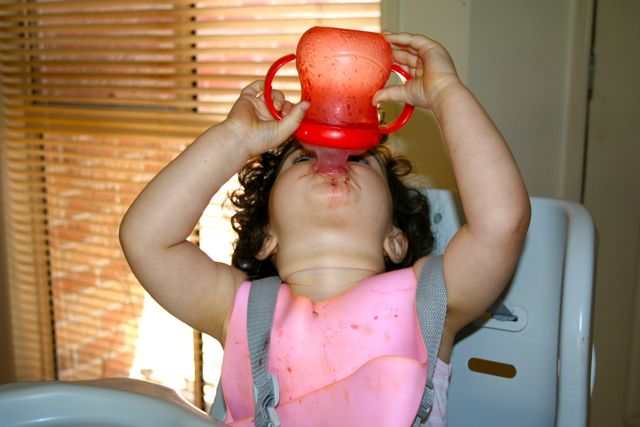
Next find yourself a supplier of “BPA FREE” bottles and tupperware (and buy silicone teets as rubber ones can set off allergic reactions in some babies). There’s also the ever reliable and safe glass baby bottles and pyrex containers. One internet supplier I’ve found is www.biome.com.au with cheap postage deals. After looking at all the BPA free baby bottles we decided to buy glass bottles with the silicone protective sleeves. Why? Because at the end of the day glass has zero risk of leaching any nasty chemicals. Just double check the bottle if you ever knock it about. I take the sleeve off, run my finger around the inside edge of the neck and carefully look over the entire body. When our twins were 12 months old they unceremoniously tossed the bottle aside after finishing it but as we fed them laying on the carpet floor, coupled with the silicone sleeve, we’ve never had cause for concern. Now they’re 19 months old they get up and bring the bottle to me wherever I am and say “tankyou”. *Awwww* We have bought BPA-free water sippy cups from I think KMart, but I made sure I washed it several times before giving it to the girls (by hand, not in the dishwasher) and taste tested the water after it had been in there an hour or two. My routine every day is to fill fresh when they wake (6:30am), empty it and refresh again at morning tea (around 9:30am) and again at lunch (11:30am) and again when they wake from their midday nap around 3:00pm and again for dinner at 5:00pm. Even though it’s a BPA-free bottle it still tastes funny to me so I continue this routine every single day and even do taste tests in between. I can’t bear to double the regret I still feel about their milk bottle feeds those first four months!
I hope to reach many mothers and help generate a lightbulb moment so they Google to learn more, throw out their baby’s current plastic bottles and go shopping for BPA-free or glass bottles.
Lighten the chemical load. Your recycling bin awaits!

Swaddling
 Somehow, even swaddled, our twin girls would wriggle over to be close to each other. That only lasted the first week and then it was fisty cuffs and give me some space sister! I enjoy these rare few photos of them cuddling in as if they were still in the womb together :*)

When buying swaddling cloth choose at least 1m x 1m. Anything smaller is a waste of time as it comes undone when bub starts to wriggle (which will be faster than you ever imagined!). I bought slightly smaller ones but thank goodness a wonderful, cluey friend sent us two really big stretchy cotton ones (pictured) 1.2m x 1.2m from Bay Bee Cino (thank you so much Megan!). They were an absolute dream and we swaddled the girls in them every day as they were winter babies. When they passed the swaddling stage we used them to drape over the pram if the sun was too bright. The smaller ones I bought are still on a shelf barely used. They became burp cloths!
Swaddling (wrapping baby tightly in a blanket) is a great way to soothe your baby giving them a sense of security similar to being in the womb. It also reduces the risk of SIDs by restricting their ability to roll over.
There are many designs for swaddling out there including pre-shaped versions. If you have a winter baby I’d be inclined to buy 2 really good quality ones and if yours is a summer baby you really aren’t going to be able to swaddle them in too much. Square muslin cloths would be ideal. Again, at least 1m x 1m. Choose fabric that is appropriate to the season and remember the wrap counts as a layer of clothing.
Babies can get tired of having their arms restricted by around 4 weeks of age and start to really protest so don’t spend too much on swaddling. Buy 2 quality ones and you can rotate them in the wash. Any more than that and you’ll find in a month you could have better spent the money elsewhere. They always make a good burp cloth if you’ve bought or been given smaller ones.
Some babies are happy to be swaddled longer, some babies never want to be swaddled even from birth. It’s luck of the draw!
And of course if you can get your hands on it, organic is best. Babies are in their swaddling nearly 24/7 the first month when they sleep the most and my feeling is the less colouring and chemicals in their clothing, the better! Brand new baby skin (and their organs) haven’t been exposed to any of the multitude of our nasty chemicals in this world yet so in their first few months especially cheapie fabrics/outfits (from China and the like) should be carefully avoided. See story on Organic Baby Sleepwear for info on PBDE’s. Organic material and pre-loved (aka pre-washed) clothing reins king!
Some favourite swaddling recommendations from other mums in my circle:
The Woombie
The Miracle Blanket
Organic Baby Sleepwear – Avoiding PBDE’s
Babies sleep anywhere up to 20 hours a day during their first few months so whatever you choose to dress them in should be very soft, comfortable and made from natural preferably organic fibres. Avoid buying stacks of el-cheapo singlets and onesies from the main outlets and go for just a couple of quality organic ones. Brightly coloured clothing means loads of dye and that’s the last thing you want on your new born baby’s skin. If your budget is very strained and you can only buy cheapies, just buy a couple and wash them 3 or 4 times before putting them on your baby. You can then feel you’ve done your best to rid as much chemical as possible before use. And because you have fewer of them it means they’re washed more often and that’s a good thing for getting out the dangerous chemicals they may be doused in over in China. Watch out for “fire retardant” or “low fire danger” tagged clothing as they have been treated with a nasty chemical known as PBDE.
 Look out for tags saying “Low Fire Danger”. It means the garment has been treated with dangerous Polybrominated diphenyl ethers (PBDE’s).
Information on the chronic health effects of PBDE below.
Quote:
“Flame-retardants are in widespread use in both the U.S. and Canada, primarily in carpet padding, foam cushions, polyester bedding and clothing, wallpaper, and the plastic housings for computers, faxes and other electronics. Most are made from variations of a chemical known as PBDE, which stands for polybrominated diphenyl ether.
According to the Washington State Department of Ecology (WSDE), in laboratory studies some PBDEs have been shown to cause problems in rodent brain development. “Most of these problems stem from pre-natal exposure and exposure soon after birth. The health effects appear to be permanent,” says WSDE. They are quick to point out, though, that levels in humans have not (yet) reached the levels that cause problems in lab animals, but that scientists are concerned because the levels in humans keep rising.
PBDEs are “persistent” in that they don’t break down but remain active in our air, water, soil and food. WSDE says that PDBEs are building up in animals throughout the food chain, even turning up in orca whales in Puget Sound in Washington and in the bodies of polar bears in the Arctic.
PBDEs also stay in our bodies, accumulating in our fatty tissue. The U.S. is the world’s largest maker and user of PBDEs, and levels found in Americans are as much as 100 times higher than in Europe, where most PDBEs were banned in 2001. North American levels, say scientists, are doubling every two to five years. Primarily, human exposure has been through eating fish, though babies can be exposed by drinking mother’s milk. Children are also exposed when they wear polyester pajamas treated with flame retardant. Indeed, PDBE chemicals easily “off-gas” from the very products they are designed to make safe.
Consumers can take precautions and avoid products that contain PBDE. Among other cautions, the Healthy Children Project recommends buying clothing, bedding and furniture made from natural fibers, such as cotton and wool, which do not melt near heat and as such do not need to contain flame-retardants.”
If your budget doesn’t allow for purchasing Organic clothing read ideas in article Pre-Loved Clothing – Avoiding PBDE’s
I may actually write a dedicated article explaining PBDE Fire Retardants and their health impacts based on findings from the Australian Government 2006 study. I’ll highlight excerpts of importance and break down the findings into key points so it’s easy to reach the important information. For those who are concerned about PBDE’s but are time poor, wading through all of these documents just isn’t possible. So stay tuned. More to come.